Quick Summary: Patio furniture refinishing fails or succeeds at the prep stage, not the color stage. Sandblasting to bare metal and proper pretreatment decide whether a powder coat lasts three years or twenty, especially in South Florida salt air. The powder itself is cheap; labor for stripping, blasting, and masking drives the bill, typically $125 to $250 per piece with sets running a few hundred to around $750. Frames with deep pitting or cracked welds are beyond saving, while solid frames benefit from a super-durable polyester that outlasts spray paint by years.
A patio set that rusted through its new finish within one season on a Broward pool deck was rarely coated badly. It was coated over corrosion that salt air had already trapped under the old paint. Metal furniture refinishing fails at the prep stage, not the color stage. That distinction decides whether a refinishing job lasts three years or fifteen near the coast, and it is where most shops cut corners.
This guide shows how to separate surface wear from structural rust, what actually drives powder coating cost (labor, not powder), and how long patio set refinishing really holds up in South Florida conditions. We restore frames, railings, and fixtures across Broward, Palm Beach, and Miami-Dade, so every step here reflects coastal exposure.
Step 1: Assess the Damage and Decide If the Frame Is Worth Restoring
Powder coating only works if the metal under it is sound. Before you spend money on any finish, sort surface problems from frame problems. Coastal salt air speeds up both, so check closely.
Cosmetic Wear vs. Structural Corrosion
Faded color, chalky gloss, and light surface rust are cosmetic. Sandblasting strips them away, and a fresh coat makes the piece look new. Structural corrosion is different: flaking scale, pitting deep enough to catch a fingernail, or rust bleeding from joints. In South Florida’s salt air, pitting spreads fast and weakens thin tubing. If a screwdriver probe sinks into soft metal, the frame is done. That kind of damage no coating can hide, and metal furniture refinishing on it wastes money.
Check the Frame Before You Invest in a Finish
Shake the chair. Wobble at a weld means a cracked joint, not a finish problem. Look under the seat pan and inside the legs, where water pools and rust starts first. Check for bent frames, split seams, and missing foot caps that let moisture in. Solid frames with ugly finishes are the best candidates, and prep work matters more than the powder itself. A guide to preparing patio furniture before restoration covers the cleaning steps that come next.
Step 2: Strip It Down: Cleaning, Disassembly, and Sandblasting to Bare Metal
Disassembly, Degreasing, and Hardware
Remove glass, slings, cushions, plastic end caps, and all bolts before refinishing. A shop can mask what you can’t remove, but bare hardware coats unevenly and seizes anyway. Wash frames with a degreaser to lift sunscreen, oil, and salt film, since any residue left behind causes adhesion failure later. Full disassembly is the first rule of professional metal furniture refinishing.
Why Sandblasting Is the Step That Determines Longevity
Old paint, mill scale, and rust must go before powder goes on. Sandblasting removes all three and leaves a rough profile the powder can grip. Skip it, and the new coating bonds to failing paint instead of the metal, so it peels within a season or two. Media choice matters too: soft plastic media or walnut shell protects thin aluminum frames, while tougher steel handles coarser grit. In coastal South Florida, where salt already worked into pits, blasting to clean bare metal is the difference between a finish that lasts years and one that fails fast.
What Cannot Be Powder Coated
Powder curing ovens run hot, so heat-sensitive parts stay off the line: glass tables, wood slats, plastic caps, rubber feet, and attached fabric. Aluminum thins thinner than about 1/16 inch can also warp. Strip these parts separately and refinish them by hand.
Step 3: Apply and Cure the Powder Coat
With clean, bare metal and a dry surface, you are ready to coat. The work moves fast here, so the shop should have everything staged before the first pass.
Why Aluminum and Steel Are Handled Differently
Both metals take powder well, but the oven work is not identical. Most powders cure at roughly 350 to 450 degrees Fahrenheit, and thin aluminum patio frames can warp if they sit too long at the high end of that range (Practical Machinist). Shop crews therefore match the powder and cure schedule to the metal, sometimes using low-temp-cure powders rated for 325 degrees (Chemquest).
Spraying, Curing, and Cooling
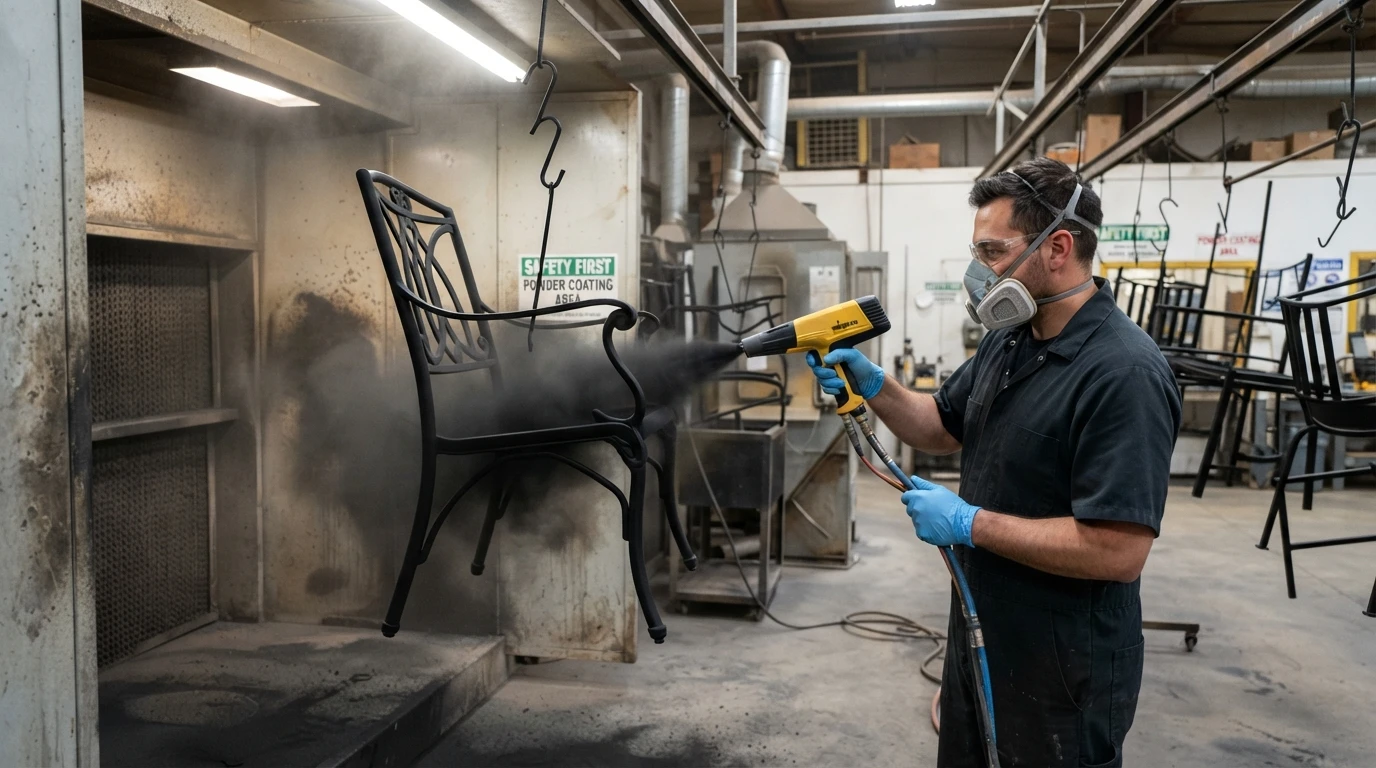
A technician sprays the powder with an electrostatic gun, which gives the dry particles a charge so they cling evenly to grounded metal, corners included (Wikipedia). The frame then goes into the oven, where the powder melts, flows, and hardens into a single smooth film. Typical bake time runs 10 to 20 minutes at temperature once the part itself is hot. Afterward the frame cools at room temperature. Handle it only once fully cool, because a warm finish scratches easily.
Choosing Color, Sheen, and Protective Options
This is where you pick the look. Textured and matte finishes hide small scratches, which suits busy pool decks. Gloss shows color best. Marine frames near saltwater benefit from polyester or super-durable powders, which resist fading far better than standard epoxy blends.
Powder Coat vs. Paint, Spray Cans, and DIY Kits
What Powder Coating Actually Does Differently
Paint sits on metal and dries. Powder melts, flows, and fuses into a single bonded skin, so it resists chipping, scratching, fading, and corrosion far better than liquid coatings, as the industry association notes on powder’s durability. Liquid paint also needs solvents; powder needs none.
The real gap shows up in coastal air. Spray paint on outdoor furniture often starts chipping and fading within a year or two, while a properly cured powder finish holds color and adhesion through salt, sun, and rain. This is why furniture restoration work done in a shop that blasts, preps, and bakes frames in controlled ovens outlasts any brush job.
Where DIY Works and Where It Wastes Money
DIY has a place. Touch-up paint, clear sealers, and spray cans make sense for minor scuffs on covered or shaded pieces. They buy time, and they cost little.
They fail on frames that see full sun and salt spray. Rattle-can finishes need constant recoating, and prep shortcuts show up as peeling within months. If you are restoring a full set for daily use, the full process of restoring patio furniture the durable way pays for itself in avoided do-overs.
How Long the Finish Lasts and How to Make It Last Longer
Expected Lifespan by Environment
A well-applied powder coat typically lasts 15 to 20 years, though sun, moisture, and salt all wear it down faster than that figure suggests. In a sheltered inland yard, expect the high end. Along the South Florida coast, salt air and intense UV can cut that span roughly in half. Standard polyester powders hold their color and gloss for about five to ten years outdoors, so a marine-grade or super-durable polyester is worth the extra cost here. Premium architectural formulas are tested for coastal climates and can push past thirty years under the right conditions.
What Shortens or Extends Powder Coat Life
Prep quality matters most. Coating applied over rust, salt residue, or old paint fails in bubbles and peel within a season or two. Coastline pieces also benefit from a quick rinse with fresh water every few weeks and covers during storm season. Ask the shop for a super-durable polyester and a written prep spec: media blasting to bare metal, phosphate or similar pretreatment, and a full cure bake.
Finding a Competent Patio Furniture Refinisher
Screen shops the same way you would screen a contractor. Ask whether they blast and pretreat in-house, which powder they would use for coastal exposure, and what warranty they offer. Shops serving Broward, Palm Beach, and Miami-Dade should answer all three without hesitation.
What Powder Coating Costs and What Drives the Final Bill
Most patio sets land between a few hundred and about $750. Thumbtack puts the national average around $425, with typical jobs running $257 to $750.
How Shops Price the Work
Shops rarely price by the powder itself, which costs only $5 to $15 per pound. They price by labor: stripping, sandblasting, masking, and hanging each part. So a chair runs less than a table, and rusted iron costs more than clean aluminum. For example, refinishers often quote roughly $125 to $150 per chair and $200 to $250 per table.
What Raises and Lowers the Price
- Prep condition: Heavy rust or old paint means more blast time, the biggest cost driver.
- Size and piece count: More parts mean more handling, but batches save money per piece.
- Color and finish: Standard colors cost less than custom or specialty powders.
- Hardware: Removing glass, slings, and fasteners adds labor.
Refinish or Replace
Compare the quote to new furniture of equal quality. A $500 refinish on a well-built frame beats a $2,500 replacement, and a fresh coat can last 15 to 20 years. If the metal is cracked or badly pitted, though, replacing it is the smarter buy.
Salt air chews through paint, but powder coating holds up for years. If your patio set is pitted and faded, Absolute Powder Coating can sandblast and refinish it. Get a free quote today.
Frequently Asked Questions
Q1: What are the best patio furniture refinishing services in South Florida?
Look for shops that sandblast and pretreat in-house, specify super-durable polyester for coastal air, and offer a written prep spec. Absolute Powder Coating serves Broward, Palm Beach, and Miami-Dade with 30+ years of experience.
Q2: What is powder coating for patio furniture?
A dry powder sprayed electrostatically onto bare metal, then oven-cured into one bonded, chip-resistant skin.
Q3: How long does powder coating last on patio furniture?
Typically 15 to 20 years inland; coastal salt and UV can cut that roughly in half.
Q4: Can patio furniture with rust be powder coated?
Yes, if corrosion is surface-level. Deep pitting or soft metal means the frame is beyond saving.
Conclusion
Restoring patio furniture with powder coating comes down to three decisions. First, sort cosmetic wear from structural corrosion, because deep pitting or cracked welds mean the frame is beyond saving. Second, demand full prep: sandblasting to bare metal drives longevity far more than the powder itself, and skipped prep is why coastal finishes peel within a season. Third, choose a super-durable polyester for salt air and judge quotes by labor and prep quality, not price alone. Done right, a solid frame refinished once can outlast two rounds of cheap spray paint and still look new fifteen years from now.